
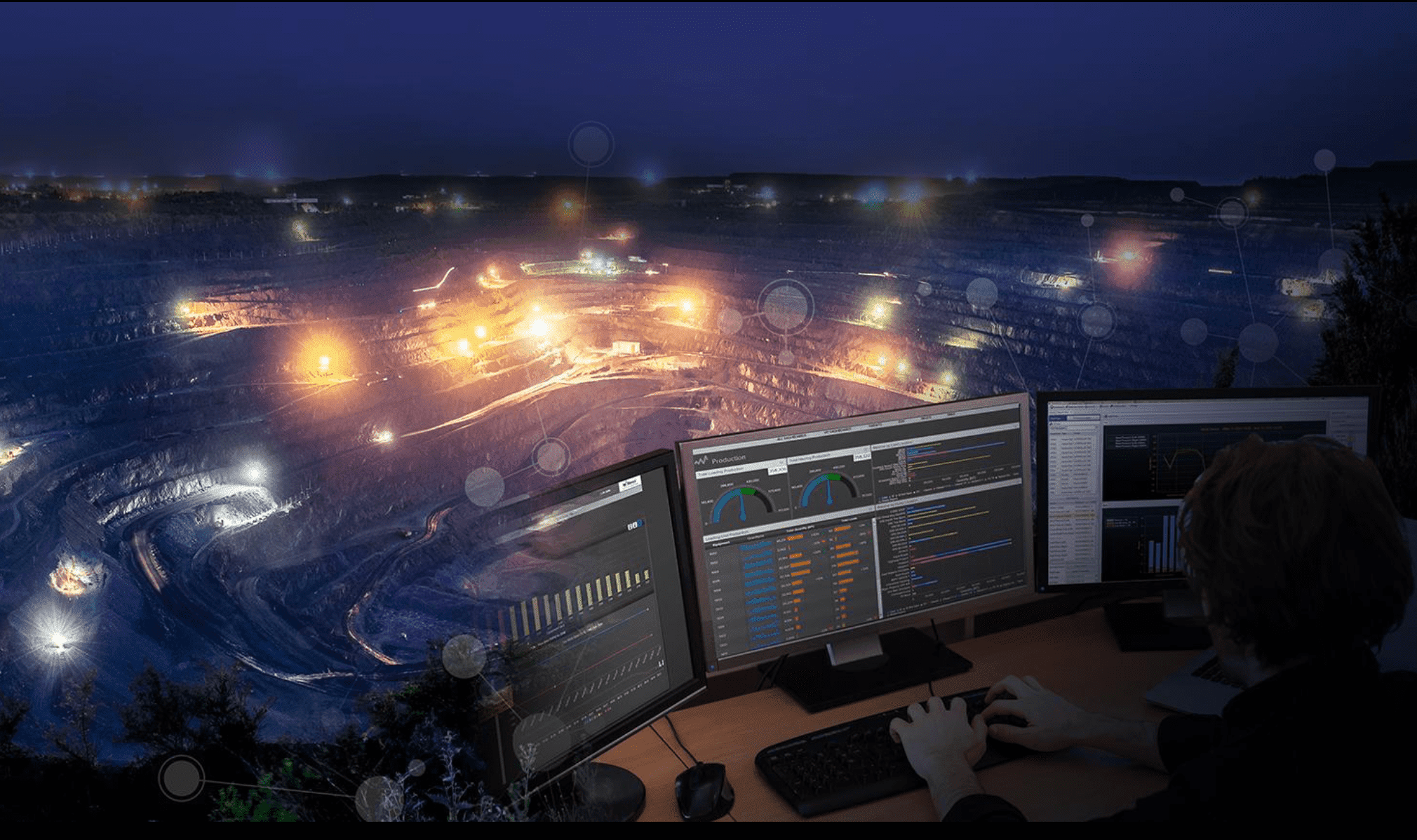

Where visibility is lost

Technology & Analytics operates at the point where operational visibility begins to diverge from execution requirements.

Across complex, asset-intensive environments, data does not fail to exist. It fragments—across systems, across functions, and across reporting layers—limiting the ability to see, understand, and manage performance in real time.

Most organisations are not lacking data.

They are constrained by fragmented visibility—often in ways that are not immediately visible.

This constraint develops across interconnected systems—where data is delayed, systems operate in isolation, and decision-making becomes dependent on incomplete or outdated information.

Performance is not limited by activity.

It is limited by the inability to translate data into real-time operational control.

Value is lost through disconnected systems, inconsistent data flows, delayed reporting, limited integration, and the absence of unified visibility across the operating environment.

These limitations rarely present themselves clearly. They accumulate across systems, processes, and decision cycles—before becoming visible in reduced responsiveness, constrained execution, and declining operational performance.

By the time visibility gaps are recognised, the underlying disconnections are already embedded within the system.

Technology & Analytics begins by identifying where visibility breaks down—across data, systems, and operational workflows—and establishing a structured view of how fragmentation, delay, and misalignment are impacting execution.

From this point, visibility is restored—enabling real-time insight, coordinated decision-making, and sustained control across the full execution environment.


Technology & Analytics

Technology & analytics breakdown does not occur through the absence of systems. It occurs when data exists—but is fragmented, delayed, or disconnected from execution.

Across asset-intensive environments, operational data is generated continuously—across equipment, systems, processes, and reporting layers. Yet this data rarely operates as a unified system.

Visibility becomes diluted.

Critical information is distributed across platforms, dashboards, and functions—without integration into a single, coherent view of operations. As a result, performance cannot be seen clearly at the point where it matters.

Most organisations are not lacking data.
They are lacking usable visibility.

This fragmentation also affects the integrity and usability of data itself. As information moves across systems, it becomes inconsistent, duplicated, or disconnected from its operational context—reducing reliability and limiting its value in supporting accurate, real-time execution.

This creates conditions where:

  • Decision-making becomes reactive rather than controlled
  • Operational issues are identified too late
  • Inefficiencies remain embedded within systems
  • Execution drifts away from intended performance

The loss is not immediate.

It accumulates—across cycles, systems, and decisions—until performance degradation becomes visible in cost, throughput, and output reliability.

Technology & analytics begins by restoring visibility at the point of execution, establishing a unified, real-time view across assets, systems, and workflows.

Once visibility is re-established, performance becomes measurable, controllable, and aligned to operational reality.

The cost of fragmented visibility
  • 60–70%
    of operational decisions executed without real-time data alignment
  • 20–40%
    delay in identifying equipment, process, and production deviations
  • 10–25%
    reduction in effective asset utilisation and process efficiency
  • 5–15%
    gap between planned and actual production, cost, and throughput

How control is restored through technology & analytics


Control is not achieved through the deployment of systems.
It is established when data, platforms, and execution operate as a single, integrated structure.

In asset-intensive environments, technology & analytics functions as the control layer of the operation—linking assets, systems, and decision points into a continuous, real-time execution environment.

This requires more than integration.
It requires structure—where visibility is consistent, data is reliable, and decision-making is aligned directly to operational performance.

Control is restored when these elements operate in unison—ensuring performance is measured accurately, managed continuously, and delivered with discipline across the operation.

Operational visibility established
Visibility is restored at the point of execution—where data, systems, and workflows previously operated in isolation. Once aligned, operational performance becomes measurable across assets, processes, and decision points. Data is no longer distributed across disconnected platforms, but structured into a single, coherent view of the operation. This enables: real-time visibility across assets and systems, consistent performance tracking across workflows, and immediate identification of deviations at source. In most environments, this results in: 30–50% reduction in data latency, 20–40% faster identification of operational deviations, and 15–25% improvement in response time across execution cycles. The focus is not on data generation, but on establishing visibility where performance is managed.
Systems aligned and integrated
Fragmented systems are structured into a unified operating environment—where data flows continuously across platforms, functions, and reporting layers. Once integration is established, inconsistencies are removed, duplication is reduced, and information becomes reliable across the execution cycle. This typically results in: 20–35% reduction in data inconsistencies, 15–30% improvement in reporting accuracy, and 10–25% increase in effective system utilisation across operations. In many operations, this creates the foundation for stable execution—where systems support, rather than constrain, performance. Value is unlocked by ensuring continuity of data across the full operating environment.

Decision-making stabilised and controlled
With visibility and system alignment in place, decision-making shifts from reactive to structured. Information is available in real time, aligned to operational conditions, and supported by predictive insight. This enables: earlier identification of operational risks, structured response to changing conditions, and alignment between planning, execution, and performance outcomes. In most cases, this leads to: 20–40% reduction in decision lag, 10–20% improvement in operational consistency, and 5–15% reduction in performance variability across cycles. The focus is not on analytics as an output, but on enabling decisions that sustain performance across the system.